As companies weigh corrugated against reusable plastic containers, the strongest choice cannot be determined by a single attribute. Packaging should be evaluated across the full system, from sourcing and transportation to reuse, recovery, recycling and end-of-life impact. When viewed through that broader lens, corrugated offers a compelling combination of renewable materials, strong recovery rates, supply chain efficiency and measurable environmental advantages.
Corrugated: Renewable, Recyclable, and Circular
Corrugated is a practical and efficient choice that can help companies balance environmental goals with operational performance. Made from renewable resources, corrugated is produced from trees and old corrugated containers (OCC), making it one of the most sustainable options available. Plus, corrugated packaging has recycling rates of 69% to 74%, making it one of the most widely recovered packaging materials in use today. This high recovery rate, coupled with the fact that recovered fibers can be reused multiple times to make new products, helps keep valuable fiber in circulation and supports companies working toward more sustainable packaging systems.
An independent life cycle assessment conducted for the Fibre Box Association by Anthesis Group evaluated eight environmental impact categories and found that corrugated packaging performs strongly in several areas that matter most to sustainability and business performance.
Reusable Packaging Depends on the System
Reusable plastic containers (RPCs) can be effective in certain closed-loop systems, but their overall benefit depends on how the system operates in practice. Key factors include:
- How many times each container is reused
- The distance containers travel for return and redistribution
- The energy and water required for washing
- How effectively the containers are recovered or recycled at the end of life
That end-of-life recovery is especially important. The same research that highlights strong recovery rates for corrugated found that polypropylene RPCs are recycled at far lower rates, with approximately 8% recovered for recycling. While reuse and recycling both support sustainability, they are not interchangeable measures, and recovery still plays a critical role in the overall environmental picture.
Because traditional plastics do not biodegrade in the same way fiber-based packaging does, effective collection, recovery, and recycling are essential to achieving the intended benefits.
Lightweight Design Improves Supply Chain Efficiency
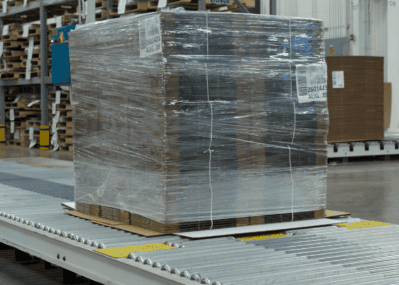
Beyond its renewable nature and recyclability, corrugated is also incredibly lightweight. Corrugated containers can weigh up to four times less than RPCs, helping to reduce freight expenses and transportation-related emissions. Anthesis Group also found that corrugated can offer transportation advantages through local sourcing and shorter supply chains, improving efficiency across distribution networks.
Corrugated packaging can also be engineered to improve trailer and pallet utilization, helping companies move more product with each shipment. This flexibility can improve cube efficiency, reduce transportation demands and create a more efficient supply chain overall.
Lower Environmental Impact in Key Categories
The same comparative study found that corrugated packaging outperforms RPCs in several environmental measures. Compared with RPCs, corrugated was reported to have lower environmental impacts in key categories, with performance advantages ranging from 57% to 110% across greenhouse gas emissions, respiratory effects and non-renewable energy use.
Corrugated delivers more than a single sustainability advantage. It’s a smart packaging choice for companies that want to balance sustainability with operational performance. Its renewable fiber base and strong recycling profile make it well-suited for organizations focused on reducing emissions, controlling costs and advancing environmental goals.
For more information about how PCA can help you reach your operational and sustainability goals, please complete our inquiry form.
Like what you read? Then be the first to know when a new article is published by entering your email below!